

REAL STORIES
Case Studies
Real entrepreneurs navigating real barriers—and the relationship-based approaches that made a difference.

CASE STUDY
DR. ASHLEY NAZON
DR. ASHLEY NAZON, OWNER & CEO, A HOLISTIC THERAPY GROUP
📍Dallas, Texas | Black woman-owned business | Growth Stage
Founder Snapshot
Dr. Ashley Nazon is a licensed clinical social worker who founded A Holistic Therapy Group after leaving a private practice that prioritized efficiency over care. Entrepreneurship was not her goal. Her motivation was rooted in client dignity and creating a practice where people seeking mental health support would be met with empathy, consistency, and respect. Launching the practice meant starting from scratch.
Unlike businesses that can scale quickly through products or inventory, therapy practices grow through trust and time— both of which are difficult to accelerate, and even harder to finance
What the System Looked Like
In the early stages, building a therapy practice placed significant financial strain on Ashley. Insurance panel approvals—the primary pathway to affordable care for many clients— often take three to twelve months. During that The risk was not a lack of demand. Clients needed services, and referrals were growing. The risk was burnout.
Juggling four jobs while growing a business left little room for rest, strategic planning, or long-term vision. The pressure threatened not only the practice’s viability but also the values that motivated its creation. Without intervention, the business could have survived—but at the cost of Mason’s own wellbeing as well as the quality of patient care.
What Was at Risk
The risk was not a lack of demand. Clients needed services, and referrals were growing. The risk was burnout. Juggling four jobs while growing a business left little room for rest, strategic planning, or long-term vision. The pressure threatened not only the practice’s viability but also the values that motivated its creation. Without intervention, the business could have survived—but at the cost of Mason’s own well-being as well as the quality of patient care.
How Impact Ventures Showed Up Differently
Ashley connected with Impact Ventures through its Capital Readiness Program. From the outset, the engagement acknowledged what traditional underwriting often ignores: building a care-based business requires time before revenue stabilizes. Through the program, Ashley received structured guidance on budgeting, pricing, branding, and storytelling—areas that had not been part of her formal training. Learning how to develop a pitch deck forced a deeper examination of her business model, competitive landscape, and growth strategy. For the first time, she was able to articulate her practice not only as a service, but as a viable enterprise.
Impact Ventures paired education with relationship. Rather than a one-time intervention, the support included mentorship, follow-up, and continued check-ins. A grant provided during the program allowed Ashley to redesign her website, improving visibility and client acquisition without increasing financial strain.
What Changed
The most immediate shift was clarity. Ashley began making more intentional decisions about where to invest limited resources, redirecting spending toward channels that actually brought in clients. Financial management improved, not through austerity, but through alignment.
Stress decreased as well. Ongoing quarterly meetings with Impact Ventures created continuity and accountability, replacing isolation with partnership.
Even after the initial program concluded, the relationship continued demonstrating a commitment that extended beyond capital deployment.
The realities of healthcare entrepreneurship remain. Insurance delays still exist. Growth is still incremental. But Ashley now operates with a clearer roadmap and a support system that recognizes the pace and pressures of her industry.
Why This Story Matters
Dr. Nazon’s experience highlights a core tension in small business lending: systems designed for speed and standardization often fail businesses that require patience and trust to grow. Underwriting Reimagined emphasizes that time is not a liability—it is a necessary input for certain industries. When lenders recognize this and pair capital with guidance, businesses rooted in care and community are more likely to survive and sustain their impact.
CASE STUDY
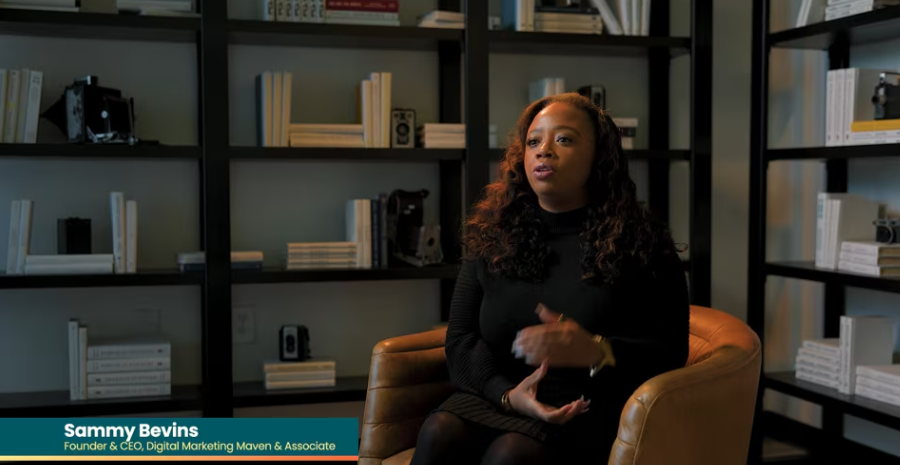
SAMMI BIVENS
SAMMI BIVENS, FOUNDER & CEO, DIGITAL MARKETING MAVEN AND ASSOCIATES
📍Dallas, Texas | Marketing & Digital Strategy Services | Growth Stage Black woman–owned business
Founder Snapshot
Sammi Bivens founded Digital Marketing Maven and Associates in 2019 after years in corporate America, bringing her experience from a global education technology company into work that supports small businesses and startups. What began as a side business grew steadily into a full-service digital marketing firm, now supported by a team of contractors delivering strategy, design, and execution for clients across the country.
By every traditional measure, the business was doing “the right things.” It was profitable, growing, and operationally sound.
Sammi held an MBA, maintained clean books, and had multiple years of revenue to show. Yet when it came to accessing capital, none of that translated into security
What the System Looked Like
Like many service-based businesses, Digital Marketing Maven faced uneven cash flow. Client payments didn’t always align with payroll and operating expenses, creating short-term gaps that required working capital. Traditional banks were unwilling to refinance or extend affordable credit, despite the business’s profitability and track record.
With limited options, Sammi turned to alternative financing products that promised speed but came with steep costs.
One loan required weekly repayments of $500— an obligation that quickly became burdensome. Refinancing that debt through traditional channels proved impossible. Instead of being evaluated on the strength of her business, she was trapped by the very debt she had taken on to keep it afloat.
What emerged was a familiar pattern described by many entrepreneurs in this project: capital felt less like a tool for growth and more like a risk to survive. Each new financing decision carried fear—fear of compounding harm, fear of making the wrong move, fear of running out of options.
What Was at Risk
The business itself was viable, but the pressure was mounting. High-interest repayments limited flexibility, drained mental bandwidth, and made long-term planning nearly impossible. Payroll obligations loomed constantly. Without intervention, the most likely outcome was not failure from lack of demand, but exhaustion from navigating a system that offered speed instead of support.
As Sammi later reflected, without a path out of predatory debt, the next step would have been more of the same—taking on new harmful financing simply to escape the last one.
How Impact Ventures Showed Up Differently
Sammi first connected with Impact Ventures through its Capital Readiness Program, where the focus was not on immediately approving or denying capital, but on understanding the business in context. The program created space to slow down, examine financials closely, and strengthen Sammi’s ability to interpret her own numbers—profit and loss statements, balance sheets, and cash flow patterns that had previously been overshadowed by day-to-day demands.
Impact Ventures built a relationship. Through continued coaching, office hours, and consistent engagement, the team gained a fuller picture of the business’s discipline, resilience, and trajectory. When capital was eventually deployed, it was intentionally structured to reduce harm rather than compound it. Impact Ventures provided a loan with a three-month grace period and interest-only payments during the first year.
The goal was not rapid growth, but breathing room—space to refinance predatory debt, stabilize cash flow, and regain control over financial decision-making.
What Changed
The immediate change was relief. With lower payments and more flexible terms, Sammi was able to step out of survival mode and think strategically again. She redirected energy toward strengthening operations and growing Marketing Maven University, a revenue stream designed to stabilize cash flow over time.
Equally important, the relationship didn’t end with disbursement. Monthly check-ins and ongoing business development support provided accountability and partnership—something largely absent from Sammi’s prior lending experiences. Not everything was instantly “fixed.” Running a growing service business remains complex, and cash flow management continues to require care. But the cycle of predatory refinancing was broken, replaced with a clear, manageable path forward.
Why This Story Matters
Sammi’s experience underscores a central finding of Underwriting Reimagined: many entrepreneurs are not failing because they are unprepared, but because the capital available to them is misaligned with how their businesses actually operate. When underwriting focuses narrowly on transactions rather than relationships, profitable businesses can still be pushed toward harmful financial products. When time, context, and trust are treated as underwriting inputs—not exceptions—capital becomes a stabilizing force rather than a threat.

CASE STUDY
SALIYMAH DACOSTA, FOUNDER, TOUCHED
📍Dallas, Texas | Massage Therapy & Holistic Wellness | Growth Stage Black woman–owned business
Founder Snapshot
Saliymah DaCosta is a licensed massage therapist with more than a decade of experience in her field. After years of watching her employers scale businesses using her labor and expertise, she made the decision to build something of her own—an opportunity to apply her skill directly toward a business she controlled.
Entrepreneurship was not a lifelong aspiration. In fact, Saliymah had grown up watching her parents struggle as business owners and initially wanted no part of it.
But massage therapy changed that calculus. It was the first profession that made ownership feel not only possible, but necessary.
What the System Looked Like
From the outside, Saliymah appeared to be doing everything right. She had a loyal and recurring client base, steady income, and a clear understanding of her business’s break-even points. She reinvested carefully, avoided reckless spending, and planned purchases strategically. Yet when she sought capital, the system offered contradictions instead of pathways.
Like many small business owners, Saliymah followed widely promoted advice on how to “build business credit.” She opened net-30 accounts, made purchases she didn’t actually need, maintained balances solely to generate signals of readiness, and invested time and money into processes that promised eventual access to financing. Despite years of effort, traditional banks still declined to extend meaningful capital.
Long-standing personal banking relationships didn’t translate into business support. Even with visible deposits and consistent revenue, access to credit remained out of reach.
The message was implicit but clear: readiness was being measured by compliance with rigid markers, not by the realities of running a servicebased business.
What Was at Risk
Without access to affordable capital, growth became a series of tradeoffs. Expansion required personal cash outlays. Large purchases threatened liquidity. Each step forward carried the risk of draining reserves meant for stability. More subtly, the system encouraged inefficient decision-making. Time spent chasing credit signals replaced time spent refining strategy. Growth conversations centered on hiring more staff—increasing overhead—rather than exploring sustainable, lower-risk ways to scale expertise. The cost wasn’t just financial. It was cumulative frustration, wasted effort, and the sense that success depended less on business fundamentals and more on decoding an opaque system.
How Impact Ventures Showed Up Differently
Saliymah connected with Impact Ventures through community channels, not through a bank referral or formal pipeline. Instead of starting with products or credit thresholds, Impact Ventures began with questions: What is the business really trying to do? What does sustainability look like for you? What are you building toward—not just next year, but long term?
Through the Capital Readiness Program, Saliymah was encouraged to slow down. Together, the work focused on clarifying her vision, developing a realistic growth strategy, and naming an eventual exit path—something she had never been asked to consider before. When capital was provided, it was tied to that strategy. Impact Ventures extended a loan based on demonstrated cash flow, professional discipline, and a clear plan for use—not on performative credit markers or collateral that didn’t exist. The funding supported marketing and brand growth, helping Saliymah invest in visibility rather than survival.
What Changed
With access to flexible capital and consistent guidance, Saliymah shifted her growth strategy. Rather than expanding through labor-intensive staffing models, she began developing ways to scale her knowledge—mentorship, education, and curriculum designed for other massage therapists interested in entrepreneurship. This shift reduced risk, preserved energy, and aligned the business with Saliymah’s long-term goal of transitioning from hands-on service delivery to education and leadership in her field.
Challenges remain. Service-based businesses still face unpredictability, and growth continues to require careful pacing. But decision-making is no longer reactive. Instead of chasing readiness, Saliymah is building from clarity.
Why This Story Matters
Saliymah’s experience illustrates how traditional definitions of creditworthiness can actively misdirect entrepreneurs. When readiness is measured by performative behaviors rather than operational reality, capable business owners are pushed to spend time and money proving eligibility rather than strengthening their enterprises. Underwriting Reimagined calls for a shift away from symbolic signals and toward contextual assessment. Saliymah’s story shows what becomes possible when lenders evaluate credibility, cash flow, and vision—rather than requiring entrepreneurs to contort their businesses to fit outdated rules.